Painting Contractor Insurance in Georgia: What “Licensed and Insured” Actually Covers
"Licensed and insured" can mean almost nothing. Here's the painting contractor insurance Georgia homeowners should verify, and how to read the certificate.

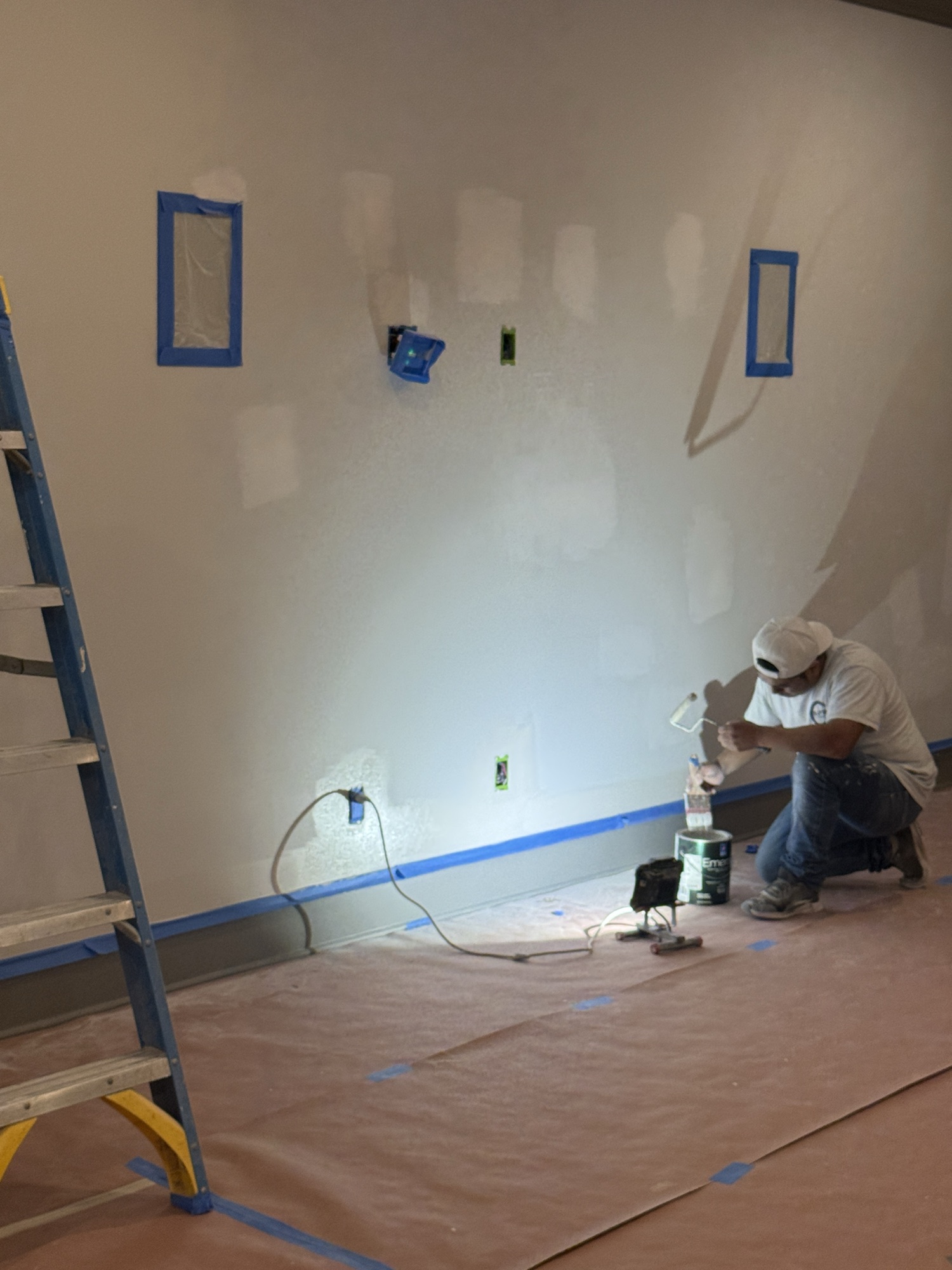
We're careful people around here. We check references on the sitter, read nine reviews before buying a mattress, and keep an entire group chat devoted to which landscaper actually shows up. Then a painter gets hired off a yard sign and hands back a key, an alarm code, and unsupervised run of every room and closet in the house for a week.
Painting is the most intimate trade there is and the one homeowners vet the least. The part that should get your attention isn't villains, it's paperwork, because the insurance question has a real financial answer and almost nobody checks it.
Am I liable if a painter gets hurt at my house?
You can be, and that's the part that surprises people. If an uninsured worker falls off a ladder in your stairwell, the first policy anyone looks at is your homeowners policy. A contractor's general liability policy generally covers damage the contractor does to your property, not injuries to the contractor's own workers. That's what workers' compensation is for.
So a company that tells you it's "fully insured" may be telling the complete truth and still be carrying only half of what you want in the mix. General liability and workers' comp are separate policies that do separate jobs, and the gap between them is where homeowner claims come from.
Does a painting contractor need workers' comp in Georgia?
Georgia requires workers' compensation coverage from employers who regularly employ three or more people, counting part-time workers, according to the State Board of Workers' Compensation. Sole proprietors and independent contractors sit outside that requirement, so a two-person painting outfit can be operating entirely legally with no workers' comp at all.
That last sentence is the whole reason to ask. Legal and covered are different questions, and only one of them protects you. There's also a wrinkle worth knowing: a contractor who hires an uninsured subcontractor can end up responsible for that sub's employees, which is exactly why established companies are fussy about collecting certificates from their own subs.
None of this makes small crews bad. I've worked alongside excellent two-man operations. It means you should know what you're looking at and decide with open eyes rather than assuming a phrase on a truck door covers it.
How do I verify a contractor's insurance?
Ask the contractor to have their insurance agent email the certificate of insurance directly to you. A certificate forwarded by the contractor is fine as a starting point, but one that arrives from the agent's office is verification rather than a photograph.
Then read four things on it:
- The policy dates. Certificates get reused. Make sure the coverage period covers your actual work dates.
- Both policies. You want a general liability line and a workers' compensation line, not one or the other.
- The named insured. It should match the legal business name on your estimate and your contract. A certificate in a different company's name is a conversation, not a red flag on its own, but you need to know why.
- Coverage limits. One million per occurrence on general liability is a common floor for residential work. Ask if you see less.
Some homeowners go one step further and ask to be added as a certificate holder, which means you get notified if the policy lapses. Any real company can arrange that in a day.
What should I ask before a painting crew starts work?
Ask who will physically be in your house, and don't feel rude about it. These five questions take about ninety seconds and tell you more than any review:
- Will the same crew be here each day, and may I have their names?
- Are they employees, or a subcontractor you've worked with for years?
- Can your agent email me the certificate showing both general liability and workers' comp?
- Who locks up at the end of the day?
- Is somebody from the company inspecting the work, or is the crew self-supervising?
Plenty of good companies work with subcontractors, mine included, and there's nothing wrong with that when the relationship is long-standing, disclosed, and insured. The situation to avoid is the outfit that wins a bid on Monday, assembles a crew on Tuesday from whoever answered the phone, and rotates in new faces on Thursday. That's the version where nobody in your house has a stake in how it turns out.
Ask me those questions too. I'd rather answer them than have you wonder, and if any company's answers turn vague, you learned what you needed at no cost.
Why do careful painting companies charge more?
Mostly this. Insurance, background checks, steady crews, and actual supervision cost money and appear nowhere in a photo of a finished wall. A premium price is usually paying for the parts of the job you can't photograph.
At Elite Finishes that shows up in a few concrete places. We work with the same long-standing crews instead of assembling one per job. We collect and track a current certificate of insurance for every subcontractor before anyone sets foot on your property, and we keep a daily log of who was on each job site, so if you ask me in March who painted your daughter's room in January, I can answer you. It also shows up in our guarantees, which are a six-month touch-up guarantee on interiors and a seven-year labor and material guarantee on exteriors, active as long as the house is professionally washed every couple of years. A guarantee only means something if the company writing it is still standing in year six, which is another thing insurance and supervision quietly buy.
What about the rest of the paperwork?
Georgia doesn't license residential painters at the state level the way it licenses electricians and plumbers, so "licensed" in painting usually refers to a local business license rather than a trade license. That's worth knowing so the word doesn't do more work in your head than it deserves.
What's actually verifiable: a business license in the city or county where they operate, a certificate of insurance from an agent, a real physical address, and a written contract that names the products, the surfaces, the coat count, and the warranty. Check your own homeowners policy too, since coverage for injuries to workers on your property varies quite a bit between carriers. A five-minute call to your agent before a big project is worth making.
If you're in Alpharetta, Milton, Roswell, Johns Creek, or Cumming and you're collecting estimates this season, ask every company on your list for the certificate before you compare prices. You'll find the prices start making a lot more sense.
Ask us for our certificates
Book a free on-site estimate. We will walk your home, and you can ask us every question in this guide.
Frequently Asked Questions
Does general liability insurance cover a contractor's injured worker?
Do painters in Georgia have to carry workers' compensation?
How can I verify a contractor's certificate of insurance?
Are painters licensed in Georgia?
Is it a problem if a painting company uses subcontractors?