Signs of a Bad Paint Job: The Two Kinds of Shortcuts, and How to Spot Them
Two kinds of painting shortcuts hide in plain sight. Here are the signs of a bad paint job and the 10-minute walkthrough that finds them.

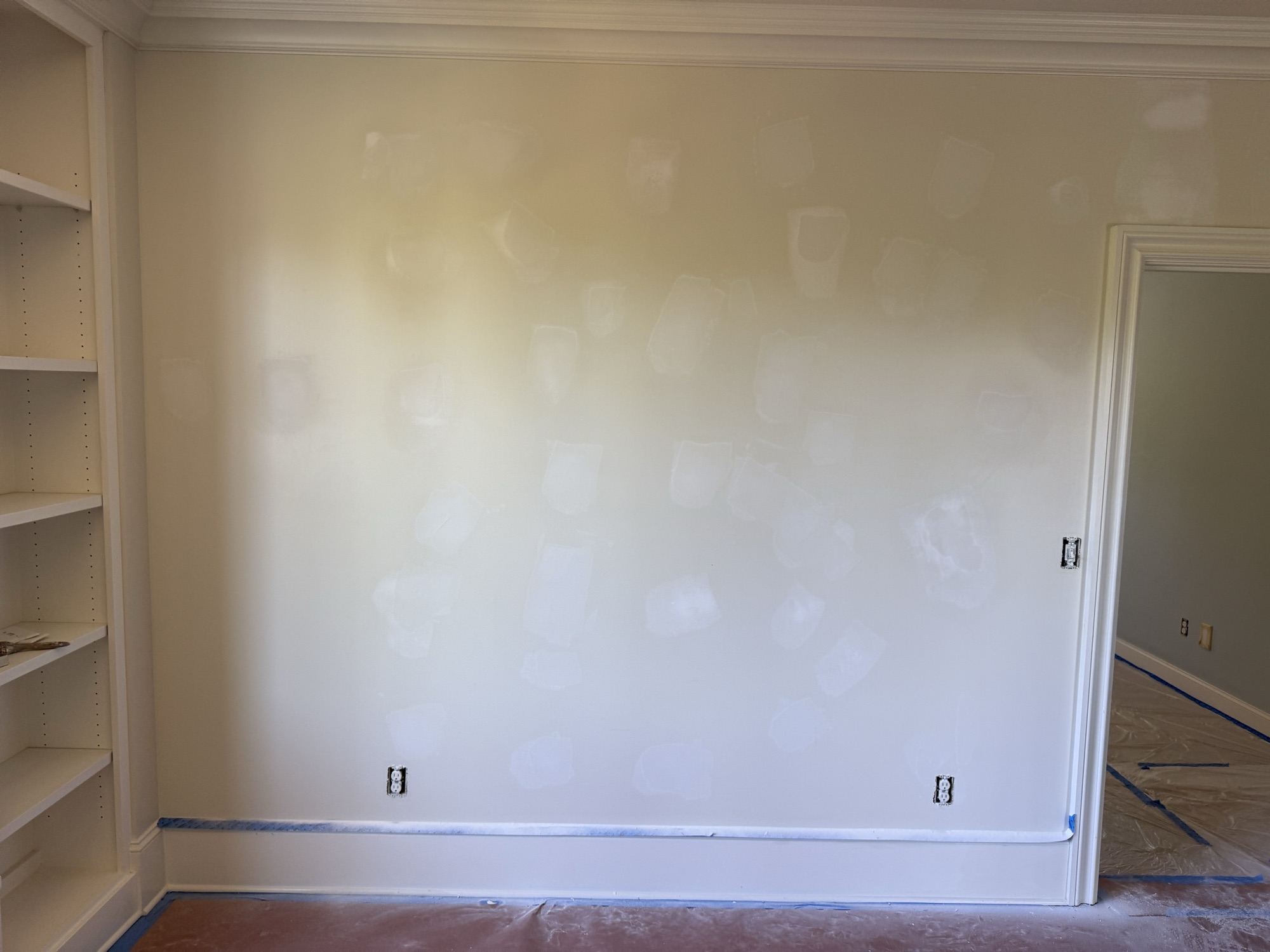
My phone does a predictable thing every October. People call asking how fast a dining room can get done before company arrives, and I never love giving the real answer, which is slower than they're hoping. Decent crews around Alpharetta and Milton are booked several weeks out by the middle of fall, so whatever gets decided in October is roughly what gets painted before Thanksgiving and everything else quietly becomes a January project.
What I wish people asked instead is how to tell a good paint job from a bad one, because that question actually has answers. Here's the uncomfortable part that costs homeowners real money: a paint job that looks flawless at the final walkthrough tells you very little about how well it was done. Paint is remarkably good at hiding how it got there. The finish coat covers the prep, and the prep is where the money either went or didn't.
What are the signs of a bad paint job?
The obvious ones turn up within a week. Paint speckled on door hinges and hardware because nobody pulled the doors, hard drips along the top edge of the baseboards, a window that no longer opens, trim with a bumpy orange-peel texture you can feel with your hand, and cut lines at the ceiling that wander instead of running straight. The expensive ones show up around year four as dull patches floating in an otherwise even sheen, faint vertical stripes where one coat did the work of two, and trim finish that peels away in a sheet the first time a laundry basket clips it.
Those are two genuinely different problems, and separating them is the most useful thing I can hand you.
What are the two kinds of painting shortcuts?
The first kind costs you looks. The second kind costs you years. Everything on a painting job falls into one of those two buckets, and a homeowner who can sort them will never overpay for the wrong thing again.
Cosmetic shortcuts affect how the room reads today and have almost nothing to do with how long the finish survives. Lifespan shortcuts happen underneath, they're invisible at the walkthrough, and they quietly set a clock on the whole job. The sales problem in my trade is that both kinds look identical on day one, so the crew that skipped the primer and the crew that didn't both hand you a room that photographs beautifully.
Which paint problems only cost you looks?
Hardware speckle, hard drips, rolled trim, wobbly cut lines, and a painted-shut window are all appearance issues. None of them shortens the life of the coating. You bought a lower-cost finish and you probably paid a lower-cost price, and that's a fair trade rather than a con.
I'd push back on exactly one of those. Rolled trim bothers me more than the rest because the texture never goes away without sanding it back down, and trim is what your hand touches. Everything else on that list can be fixed in an afternoon by somebody with a razor blade and patience.
Which shortcuts actually shorten the life of the paint?
Three of them, and they're the reason two identical-looking bids can be thousands apart: painting over patches and bare spots without primer, stretching paint past its spread rate, and coating glossy or previously oil-painted surfaces without sanding and a bonding primer.
The why behind all three is the same. Paint shows up as a liquid, and its entire job is to turn into a film of a particular thickness that's actually stuck to what's underneath. Protection lives in that film. Most premium interior wall products list coverage somewhere around 350 to 400 square feet per gallon at the recommended thickness, and that number is printed on the manufacturer's tech data sheet, not invented by the painter. Stretch that gallon across 500 square feet and you've got roughly two-thirds of the film you paid for, spread across a wall that looks perfect and will start telling on itself years earlier than it should.
Primer over patches matters for a different reason. Joint compound is far more porous than the surrounding painted wall, so it drinks the finish coat and dries to a different sheen. That's what people are seeing when they describe dull ghost spots floating in a wall a year later. The repair was fine. The sealing step wasn't.
Why do painters sand glossy trim before painting it?
Because adhesion is mechanical as much as chemical, and a slick factory or oil-based finish gives new paint nothing to grab. Scuff sanding opens the surface, a bonding primer bridges the two, and the new enamel stays put.
This matters more here than people expect. Plenty of houses in North Fulton built before the mid-2000s have oil-based trim, and modern waterborne enamels don't reliably stick to cured oil. You can't tell by looking. A painter who rubs a hidden spot with denatured alcohol to check, or who simply primes for adhesion because it's cheaper than being wrong, is protecting you rather than padding the estimate.
Why do cheap painting bids only put one coat on trim?
Because trim is the slowest surface in the house, and a second coat on it costs far more crew hours than a second coat on walls. When a company has to win on price, trim is where the coat quietly goes missing, and I'd say it's the single most common place a bid in this market gets thin.
Walls go fast. A roller covers a lot of square footage in a hurry, so a second coat on walls adds comparatively little time. Trim is the opposite. Doors, casing, base, and built-ins all have to be cut by hand or sprayed and back-brushed, they have edges and profiles that hold paint differently, and the enamel needs real dry time between coats before anyone can touch it. Doubling the coats on trim comes close to doubling the labor on the most expensive-per-foot surface in the house. So it disappears from the scope, the bid comes in noticeably lighter, and nothing about the finished room announces what happened.
Here's why one coat on trim is a problem rather than a preference. Enamel needs to build and level to look like a finished surface, and a single pass leaves the film thinnest right at the edges and profile corners where hands, vacuums, and laundry baskets make contact first. If the old trim color was even slightly different, one coat lets it read through at those same edges. The sheen often comes out uneven too, because the areas that got a heavier pass cure to a different gloss than the areas that didn't.
Check it yourself the same way you check walls. Rake a flashlight along the door casing and look at the inside edges of the doors and the underside of the handrail, since those are the spots that get the least attention on a one-coat job. Compare a section behind a door to a section out in the open.
Then get it written down. On your estimate, "two coats" usually refers to walls unless somebody says otherwise, so ask for trim and doors to appear as their own line with their own coat count. Any company planning to do it right will not blink at putting it in writing.
How do you inspect a paint job before you make the final payment?
Take ten minutes with a flashlight while the crew is still on site, not after they've packed up. Hold the light nearly flat against the wall so the beam rakes across it, and look along the surface instead of straight at it. Raking light exposes everything the room's own lighting is hiding.
Here's the full walk. Rake every patched area and look for a change in sheen. Rake each long wall for faint vertical stripes, which mean thin coverage. Run your hand along the trim and doors, since your palm finds texture your eye skips. Open and close every door and window. Check the hinges, the outlet covers, and the tops of the baseboards. Then come back at night with the lamps on, because cut lines and ceiling edges show up completely differently under warm light than they do at two in the afternoon.
Anything you find goes on a punch list before the final payment, which is the entire reason to hold a final payment.
Is a cheap paint job ever the right call?
Sometimes, yes, and I've talked people out of hiring us on exactly these grounds. If you're selling in two years, or it's the playroom and the kids will outgrow the color anyway, or this simply wasn't the year for it, paying for a finish built to last a decade is money you don't need to spend.
What's worth avoiding is somebody taking the second kind of shortcut and charging you like they took none at all. That's the version where you buy the job twice.
What should you ask before anyone starts?
Five questions, and any serious company will have the answers ready and probably enjoy giving them a little too much:
- What spread rate are you planning for my square footage?
- How do glossy, bare, and patched surfaces get prepped?
- Does "two coats" mean two full coats, and does that include trim and doors or only walls?
- Will the same crew be here every day, and who from the company is inspecting the work?
- What's the warranty, and does it transfer if I sell?
For what it's worth, here are ours. We use Benjamin Moore and Sherwin-Williams products. You get one point of contact from the company who runs your project rather than a crew supervising itself, and we keep a daily log of who was on your job site, so if you ask me in March who painted your daughter's room in January, I can tell you. Interiors carry a six-month touch-up guarantee and exteriors a seven-year labor and material guarantee, which stays active as long as the house is professionally washed every couple of years. Ask me the rest of those questions too. I'd rather answer them than have you wondering in year four.
Walk your rooms this week with the flashlight before you even call anybody. You'll learn more about what your house actually needs in ten minutes than in three estimates.
Book a free on-site estimate
A no-pressure walkthrough of your home, with prep and coat counts for walls, trim, and doors written into the estimate.
Frequently Asked Questions
How long should a good interior paint job last?
Can you tell if a painter used two coats?
What causes dull or shiny patches on a freshly painted wall?
Should I pay the full amount at the final walkthrough?
Is it worth repainting a room before hosting for the holidays?