How Long Do Painted Cabinets Take to Cure? A Kitchen Countdown for the Holidays
How long do painted cabinets take to cure? About three to four weeks. Here's the holiday countdown, week by week, from a North Atlanta cabinet refinisher.

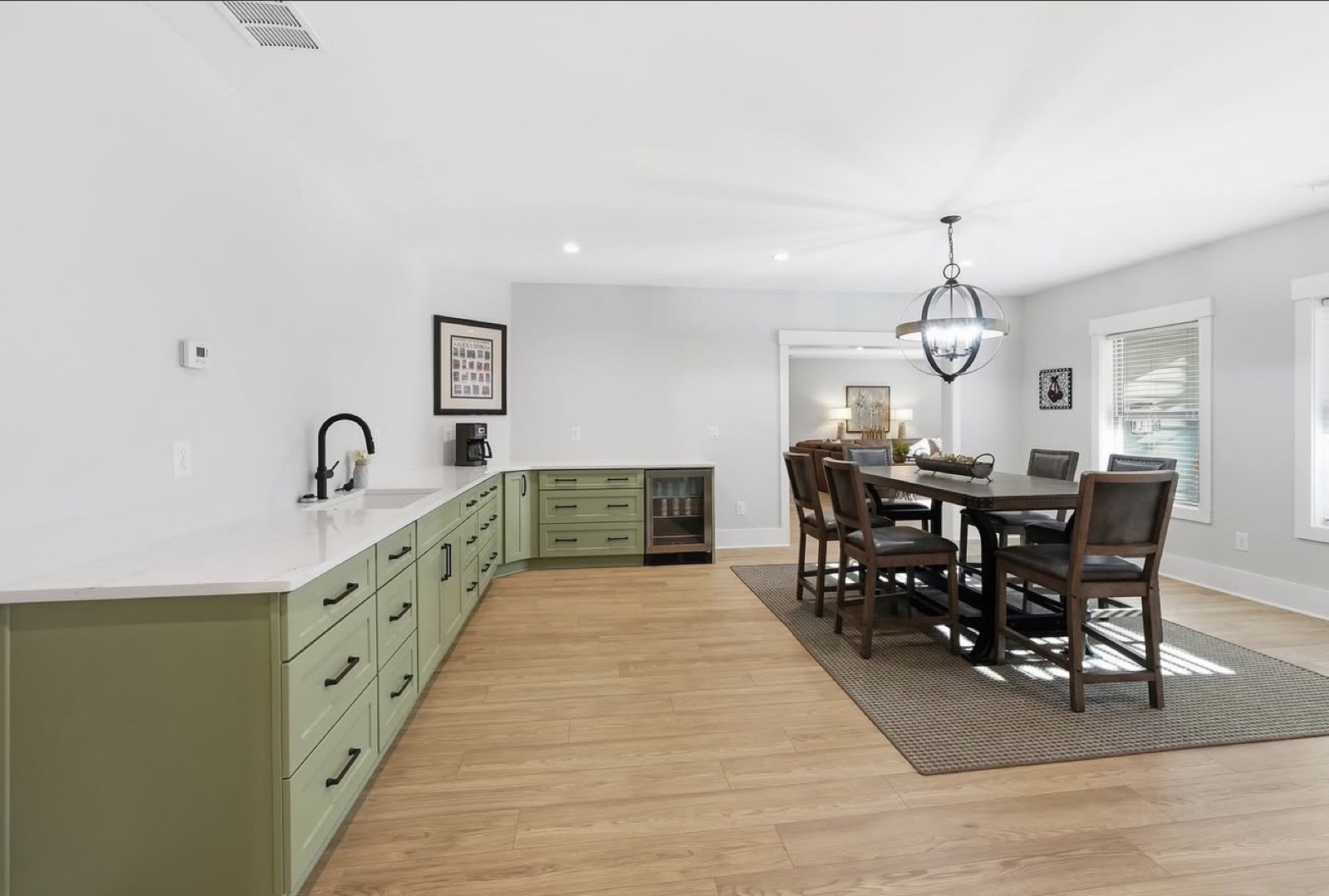
Somebody asks me this every fall, usually in a slightly hopeful voice, and the honest answer has less to do with how fast we can paint than with how long the finish needs to be left alone afterward. Cabinets are the biggest visual change you can make to a kitchen without moving a single thing, and the kitchen is where everybody ends up standing anyway, so I understand the urgency completely. The calendar just matters more than most people realize.
How long do painted cabinets take to cure?
A good cabinet enamel is dry to the touch within a few hours and looks completely finished the same day, but it stays soft underneath for about three to four weeks while it cures. During that window, stacking plates on a shelf, closing a door tight against its frame, or taping anything to a surface can leave a permanent impression.
Dry and cured are two different milestones, and almost every cabinet complaint I hear traces back to somebody treating the first one as the second. The finish isn't damaged when you press a plate into it at day five. It's recording what you did, the same way a footprint records in setting concrete.
That tacky feeling people notice on built-ins months later comes from the same thing, usually made worse by the coating going on too thick. A heavy film cures from the outside in and the underneath never fully hardens.
When can I actually use my kitchen again?
You can use the kitchen almost immediately and the cabinets carefully. Here's the week-by-week version I give clients.
Week one. Doors and drawer fronts go back on at the end of our work, and from that moment the finish is fragile. No shelf liner, no stacking heavy dishes, no taping notes or decorations to a door. Leave doors slightly ajar overnight where you can, because two enamel surfaces pressed together can bond, which is called blocking, and pulling them apart tears the finish.
Weeks two and three. Normal opening and closing is fine. Keep felt bumpers on the door corners, avoid cleaning products entirely, and don't slide anything heavy across a painted shelf.
Week four and after. Full duty. Wipe with a damp cloth and a mild soap. Skip anything abrasive or ammonia-based for the life of the finish.
None of this is fussiness. It's the same reason a crew will tell you to leave freshly painted doors open for a few days: the film is still hardening for weeks after everyone has driven away.
When do I have to start to have cabinets done before Thanksgiving?
Count backward. Thanksgiving falls on November 26 this year, so the finish needs to be done by about November 5 to get its three quiet weeks. Add the job itself, which runs several days to a week depending on door count, plus whatever a good shop's current lead time is, and the decision needs to be made in the first half of October.
Miss that and January is genuinely the better answer. The kitchen goes back to normal use, the house empties out, and the finish gets the quiet it's asking for. The worst version of this plan is finishing a kitchen the week before twenty people and a turkey come through it. I've taken that job against my own better judgment and spent part of a holiday week touching up doors I'd already touched up once.
For Christmas the math is easier. Finishing by about December 3 gives you the full window.
Why is degreasing the most important step in cabinet refinishing?
Because kitchen cabinets carry years of airborne cooking oil, especially around the range and above the hood, and no coating sticks to that. Degreasing is the whole ballgame, and skipping it is the single most common reason a cabinet job fails in year one.
Think of a bandage on a muddy cut. It doesn't hold the way it does on a clean one. Same physics, less dramatic.
The second reason cabinets fail is the finish underneath. Factory finishes are engineered to be slick, which is wonderful until you need something to bond to them, so they need scuff sanding and a bonding primer before any color goes on. Those two steps are what give the new coating something to grab. They're also invisible in every photo of a finished kitchen, which is exactly why they're the first things to disappear from a cheap bid.
Can you paint thermofoil cabinets?
Not reliably, and I'd rather tell you that before quoting than after. Thermofoil doors are a vinyl skin over a substrate, and coatings don't bond dependably to that skin. Heat near an oven or dishwasher can also cause the foil to lift on its own regardless of what's painted on it.
If your doors are thermofoil and the boxes are solid, replacing the doors and refinishing the frames is often the sensible route. That's a conversation to have before anybody hands you a price.
One more product question worth settling up front: wall paint on cabinets never truly hardens. A kitchen done in the same product as the hallway will stay slightly tacky and mark forever. Cabinets want a purpose-built cabinet enamel, and both Benjamin Moore and Sherwin-Williams make excellent ones.
What should I ask about containment and dust?
Ask specifically how the kitchen gets sealed off, how dust from sanding is controlled, and what happens to the appliances. Fine overspray travels much farther than people expect and it does not come off a stainless refrigerator easily.
Real containment means plastic walls at the openings, floors and counters covered, appliances wrapped, and usually a negative-air setup so dust moves out of the space rather than into your keeping room. We do cabinet work on site rather than hauling your doors away to a shop, which keeps your kitchen from being held hostage by somebody else's schedule and keeps the doors with their own boxes and hinges. It also means containment has to be done properly rather than talked about, because the spraying is happening in your house.
The answer you're listening for is a specific one. Anybody who says "oh, we put down some drop cloths" is telling you where your dust is going to end up.
Is cabinet refinishing worth it?
By a wide margin, yes. It's the best money in a kitchen short of replacing the layout, and it changes the room more than new counters do for a fraction of the cost and disruption.
My only real condition is the calendar. Give the finish the three quiet weeks it's quietly requesting, and you'll get a kitchen that still looks sharp in year eight instead of one that has a plate-shaped mark on the third shelf forever. Our interior work, cabinets included, carries a six-month touch-up guarantee, which exists precisely because the first few months are when a finish tells you whether it was done right.
If you're in Alpharetta, Milton, Johns Creek, or anywhere in North Atlanta and you're weighing October against January, call early enough to have the choice. Deciding is a lot more pleasant than backing into it.
Weighing October against January?
Book a free on-site estimate and we will map your cabinet timeline backward from the date that matters.
Frequently Asked Questions
How long does cabinet paint take to fully cure?
Can I put my dishes back right after cabinets are painted?
Why are my painted cabinets still sticky weeks later?
Can thermofoil cabinets be painted?
How long does a cabinet refinishing job take?